

The Fund invests its money to make sure there’s enough to pay members’ pensions in the future. Pension fund investments are affected by, and contribute to, climate change – we’ll explain how.
We’re making the Fund’s investments better for the planet, which makes them better for your pension at the same time.
Switching to a sustainable pension is 21 times more effective at cutting your carbon footprint than stopping flying, going vegetarian, and switching energy supplier combined, according to Make My Money Matter.
Better for your pension as well as the planet
We invest the money in the Fund so we can always pay members’ pensions
We invest the Fund’s money in a diversified mix of assets – including government bonds, corporate bonds, and company shares – to generate the returns needed to pay your pension.
Pension fund investments are affected by climate change
Climate change poses risks to our investments – like floods damaging buildings, or droughts affecting food supply chains. But it also creates opportunities. Companies developing clean energy and low-carbon technology are well-positioned for future growth, which helps your pension.
Pension fund investment emissions contribute to climate change
Most companies we invest in generate emissions. We’re working to reduce these emissions, which protects the Fund’s value while tackling climate change.
How we’re reducing our investments’ emissions:
Investing in renewable energy
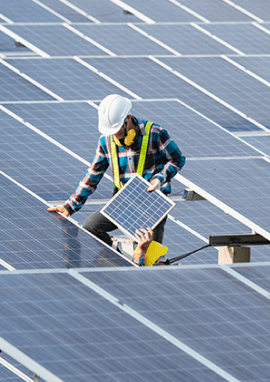
We invest in renewable energy and climate solutions such as wind and solar as part of our investment mix designed to grow over the long term.

Using our investor influence to encourage companies to change
When you invest in a company, you get the voting rights that come with being a shareholder. This gives you a say in how the company is run. We could just stop investing in companies that have high emissions. But this won’t solve the problem of climate change. It will just pass the problem on to the next person who invests in them.
Instead, we use our voting rights. We vote at company meetings and work with their boards. We encourage them to reduce emissions, set climate targets, and improve how they treat the environment.
Our investment partner, Schroders Solutions, engaged with 4,713 companies during 2024 – with over half of these conversations focused on climate change.
Over the last year, our investment partner has:
- Worked with one of our credit managers to transition their entire investment approach to include a strict net-zero target
- Engaged with managers on the subject of high carbon emissions in their portfolios, pushing them to provide detailed analysis and improvement plans
- Prioritised engagement with managers who score lowest on climate integration (how well they consider climate in their investment decisions), holding them accountable for improvement
You can read more about our approach to responsible investment in our Implementation Statement (PDF).
Our progress in numbers:
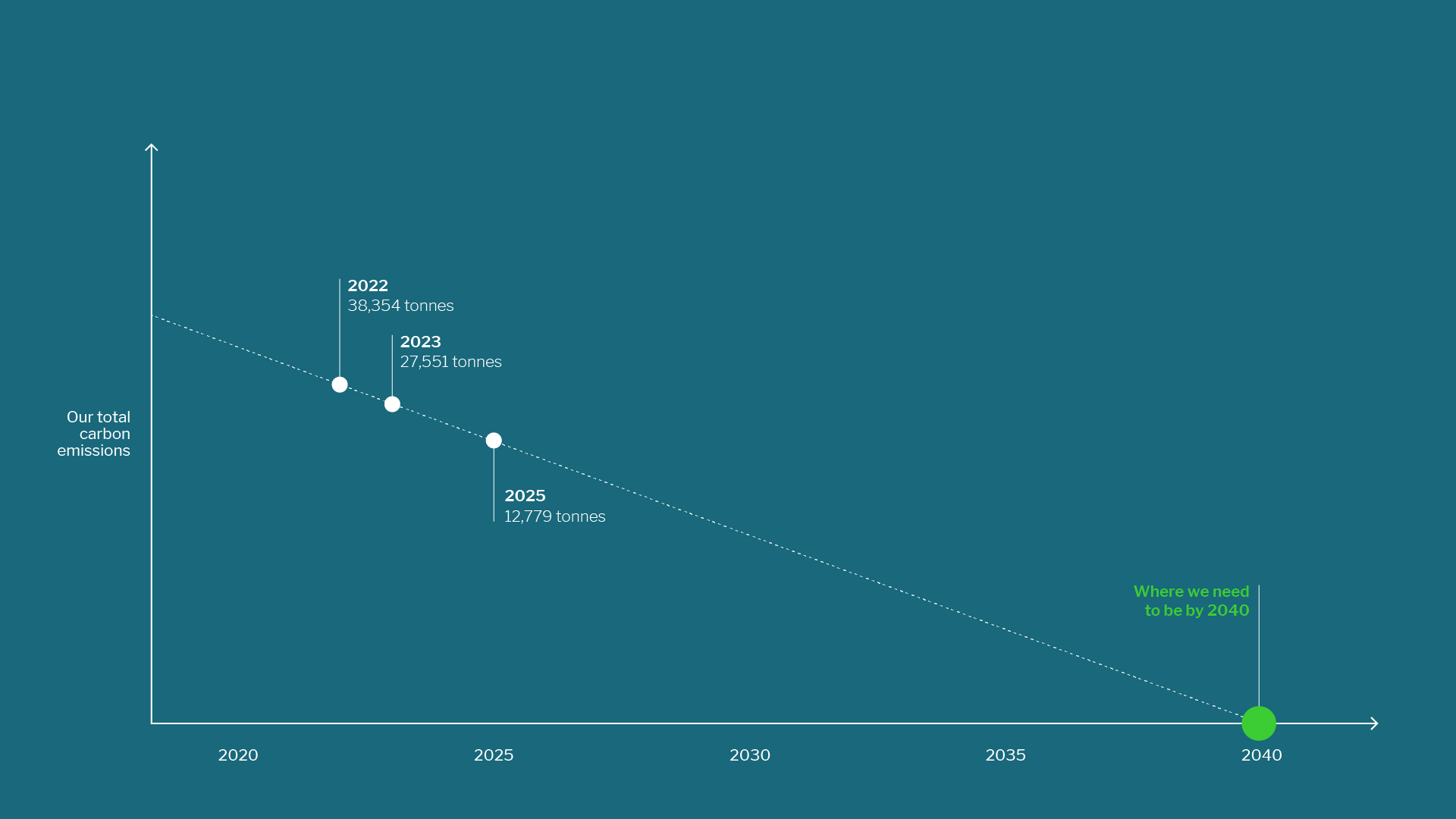
We’ve reduced our emissions by 67% since we started measuring in 2022. That’s the equivalent of flying round the world more than 2,000 times.
These figures focus on our growth investments, where we’re delivering returns and influencing climate action. We’ve excluded part of the portfolio called Liability Driven Investment (LDI). These investments are chosen for the financial protection they offer, not for growth or climate considerations. Leaving them out gives you a clearer picture of the progress we’re making in the investments where we can actively drive down emissions.
We haven’t included the figure for 2024 because we transitioned to a new investment partner during that year, so the figures won’t give you a clear picture. We’re showing 2025 as our first full year with the new approach.
Some measures (like emissions per pound invested) rose because we now hold more company shares to deliver the returns needed for your pension. However, we’re choosing companies with credible climate plans. The overall trend is strongly positive.
We’ve started to measure our progress differently
Instead of only measuring past emissions, we now measure whether companies have credible plans to reduce emissions in the future. This forward-looking approach rewards companies with strong transition plans and helps us influence change rather than simply avoiding polluters.
Our investment partner uses this same science-based approach, which means we benefit from their expertise in tracking and managing climate risks.
Our target measures how our investments align with global climate goals. If every company performed like those in our portfolio, global warming would reach a certain temperature.
We’re working toward the Paris Agreement goal of limiting warming to 1.5°C. By 2030, we’re aiming to reach 2.2°C. This interim target gives us a realistic goal to work toward while keeping us on track for 1.5°C in the long term.
We started comprehensive tracking of this measure in 2025 and will report our progress toward the 2.2°C target each year.
Our ultimate commitment: net zero by 2040
Whatever metrics we use to track progress along the way, our ultimate goal remains unchanged: net zero emissions by 2040 or sooner.
This means reducing emissions as much as possible, with any unavoidable emissions cancelled out by removing greenhouse gases from the air (such as by planting trees). That way there’s zero emissions in total.